


How can you communicate innovatively in the tourism market?

After reviewing the publishing market, it’s time to share some new market trends, this time focusing on the tourism sector, which—unlike publishing—experienced a decline during the global pandemic. After some drops in visitor numbers in 2022, 2023 finally marks the end of a slight downturn for French tourism.*
Heavily impacted by COVID-19, with a 26.7% drop in tourism in 2021 and a disastrous year in 2020, France began to bounce back in 2022, despite rates still being lower than pre-COVID years (-13% vs 2019).
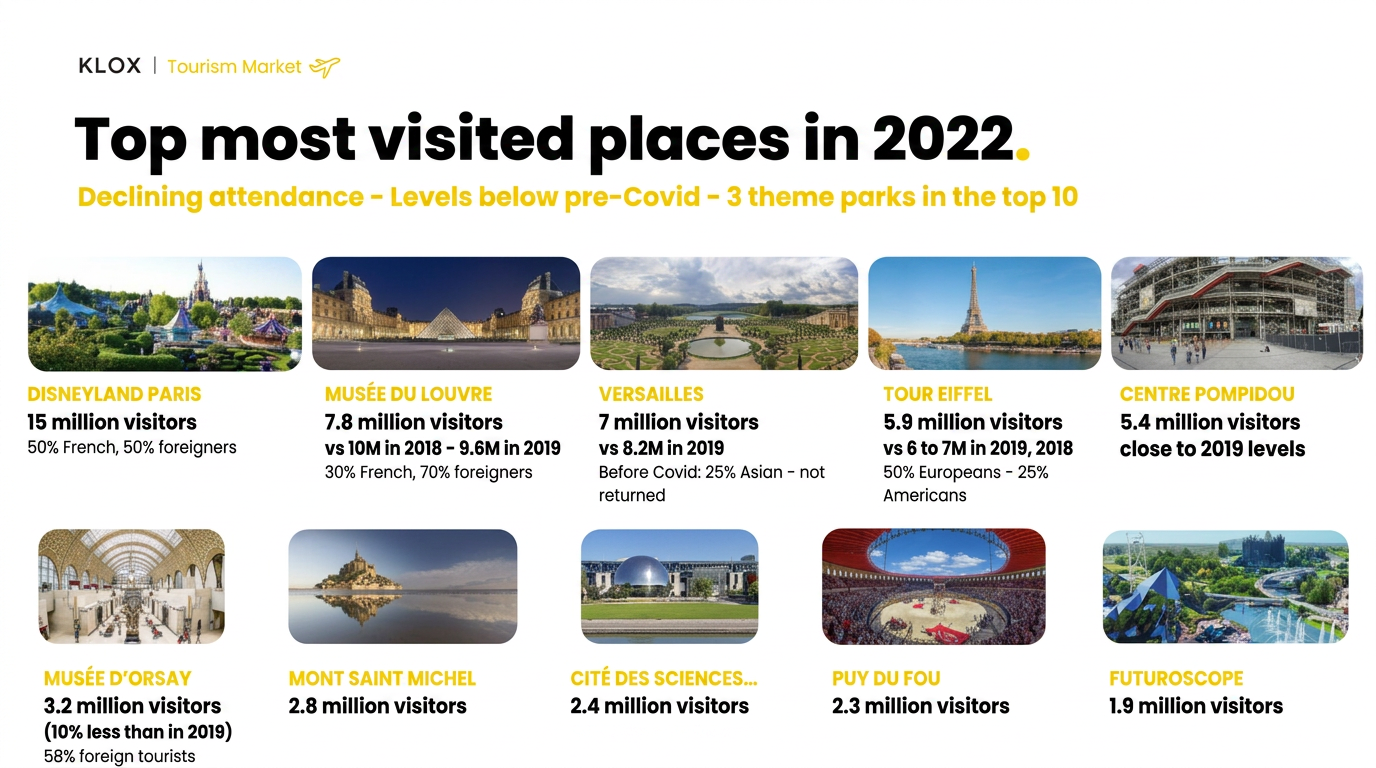
However, the figures remain encouraging, and France has maintained its title as the world's leading tourist destination for 30 years. Domestic tourism plays a vital role in this recovery and the rise in numbers. Indeed, with 25 million French tourists in 2022, the tourism economy relied heavily on travel within the country. Nevertheless, it is the summer of 2023 that truly confirms a decisive recovery for tourism in France.
+3% more tourists in summer 2023 vs 2022, a small figure, but one that reflects greater tourist diversity with the return of international visitors (primarily European and North American).
Why innovate?
1. To stand out in an increasingly competitive market with an effective and innovative strategy.
2. To prepare for 2024 and new challenges such as inflation, environmental concerns, and changing consumer habits.
Indeed, with new social and economic phenomena like inflation, as well as evolving consumer habits and lifestyles, we are seeing many new trends emerge that are ripe for the taking:
I. THE INTENSIFICATION OF TOURISM
- Revenge travel : despite higher prices, the health crisis has increased the desire to travel. About 1/3 of French people wanted to enjoy traveling even more in 2023, and 17% were willing to spend more.
- Bleisure & Workcations: the phenomenon of digital nomadism and the rise of remote work in companies have given birth to new concepts and ways of traveling. We often refer to this as bleisure and workliday which refers to the desire to combine "pleasure and work." To do this, tourists will look for destinations better suited to remote work in order to extend their length of stay.
II. MORE SUSTAINABLE TOURISM
- Slow tourism: 90% of consumers are now looking for sustainabletourism; new forms of tourism such as "slow tourism" are meeting this demand. The goal: to offer travelers a more authentic experience that is close to nature and environmentally friendly.
- Local tourism: This desire for authenticity and more sustainable travel will increase local trips. We are seeing a rise in local searches for rural destinations within 155 miles (250 km) of Paris, favored by more than 60% of French travelers between September 1, 2021, and August 31, 2022.
III. EXPERIENCE AT THE HEART OF CONCERNS
Although tourism is not declining despite rising prices, we are still seeing a shift in how consumers relate to travel. As a result, 80% of innovation in the tourism sector will focus on leisure activities which are becoming an excellent alternative for people who cannot afford to go on vacation.
- Micro-adventures : "Micro-adventures," aimed primarily at younger audiences (15-26) and families, will offer short-term activities that allow people to (re)discover their local area through various themes (family-focused, public holidays, nature, etc.). This concept also includes day trips or weekend getaways. This new tourism trend also highlights "cycle tourism" and routes dedicated to bike rides. It’s a way to explore without spending too much while staying close to home.
- Unique experiences : Unlikemicro-adventures, unique experiences reflect the desire of more than 40% of tourists to completely escape their daily routine during their travels and experience a real culture shock. Offering unusual destinations or exclusive itineraries is therefore an excellent way to stand out.
- Digitalization & Gamification : Finally, between immersive experiences through virtual reality and digital tours, which saw explosive growth during the health crisis. Accompanied by the use of AI such as ChatGPT to plan trips. The advancement of new technologies is therefore establishing itself as a tool for innovation that is disrupting the codes of the tourism sector and offering entirely new ways to travel.
DIGITAL AND TOURISM: A WINNING BET
With 42% of tourists booking their vacations based on the Instagrammability of a destination (eDreams Odigeo survey), the power and importance of digitalization in the tourism sector cannot be denied. Digital now plays a major role, not only within tourist sites but also in other establishments like hotels. Indeed, between social media and technological innovations, it has become necessary to incorporate these tools into a communication strategy.
To discover all the statistics, you can watch the replay of our webinar
But, in the age of information overload and information fatigue, you must go beyond simply digitizing your communication and chasing new trends; you need to innovate in every aspect of your strategy. Indeed, between channels, content, and format, a vast number of possibilities are available to you.
Innovate your channels:
Klox recommends its top 2 channels to use in 2024
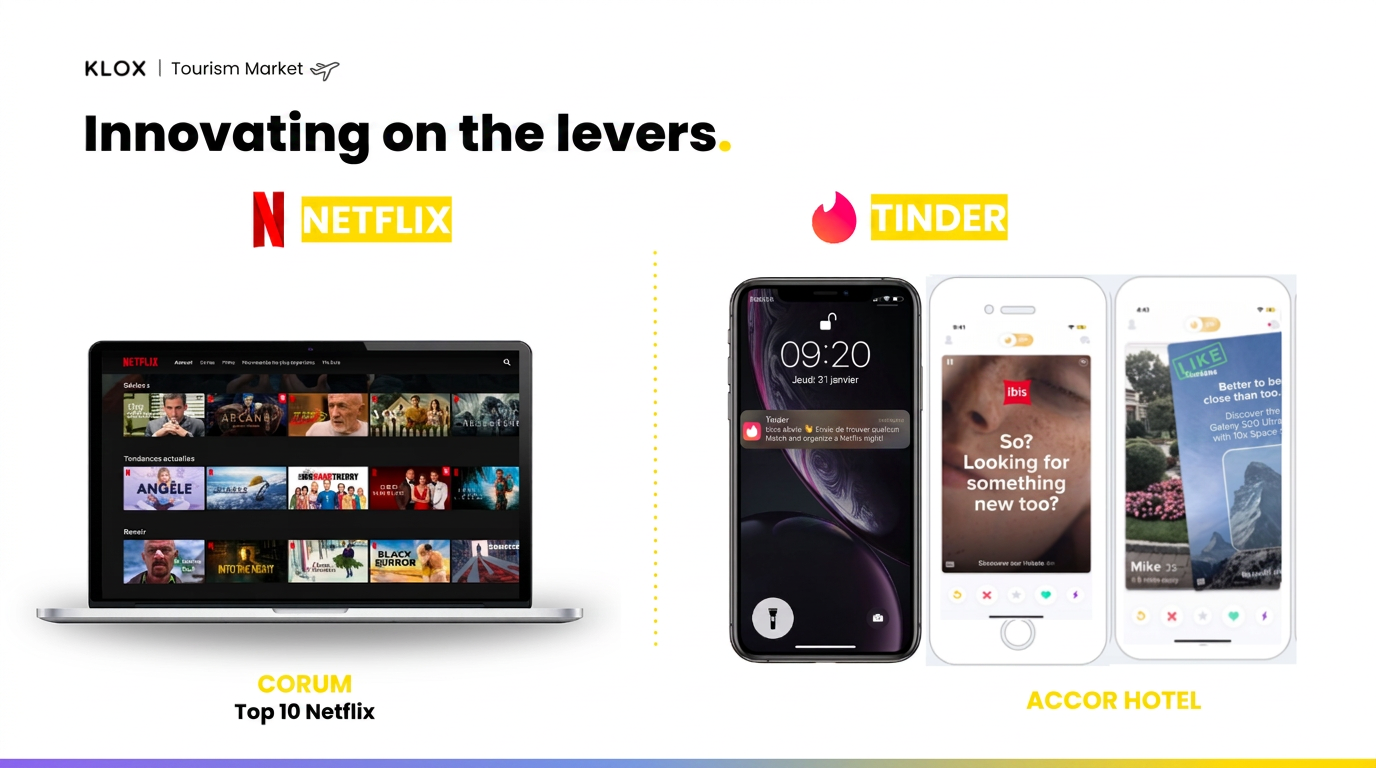
But also other levers such as TikTok the social media platform that continues to explode with steady growth in France (22 million monthly users),audio, Connected TV, DOOH, and others...
For more information and ideas on levers, watch the replay of our Tourism webinar
Innovate your content:
- To do this, identify your brand correctly and stay consistent!
- Find a clear and precise purpose and message for your content (entertaining, informative, etc.)
- Don't adopt trends that don't fit your brand; stay authentic!
- Don't be afraid of video; it's a format that works
- Optimize the format and resolution of your content
- Storytelling ⇒ don't just show something (for example: photos of landscapes), create a story around the content you share
- Build bridges with other industries (culture, video games, major sporting events, etc.)
- Don't hesitate to leverage trends and current events like major sporting events such as the Olympics (for more information, you can read our article dedicated to major sporting events)
- Snackable content is your best friend (infographics, quotes, memes, GIFs, Reels, short articles, etc.)
Influencer marketing is also a trending topic worth jumping on! Research influencers who align with your brand and reach out to them to set up exclusive communication projects.
Innovate in your format:
Embrace the power of gamification
Especially on Meta, which offers numerous tools to stay close to your consumers and followers:
- Create events and broadcast channels
- Create interactive games to help people discover your world
- Let your creativity run wild!
If you would like to discover other innovative formats, contact our teams
👉 In short.
Here is a summary of the 4 key points to remember for an innovative and effective communication strategy!
1. Work on the appeal of your offer:
- By polishing your social media presence and trying to create viral content
- By being flexible
- By offering an attractive price-to-quality ratio
2. Highlight the traveler/tourist experience:
- By emphasizing the rarity and uniqueness of the experiences offered
- By creating events around your programming, whether you are a museum, a region, etc.
- By focusing on immersion and exotic concepts
3. Focus on micro-adventures and local tourism
- By choosing specific themes
- By creating short itineraries (less is more)
- By considering digital alternatives
4. Innovate your media to stand out in an increasingly competitive sector
- By creating creative and impactful content
- By using original levers to stand out and innovative strategies such as gamification, interact with consumers!
- Finally, by working on targeting and retargeting of your audiences, particularly through the creation of personalized journeys and recommendations powered by AI.
[Take your communication strategies to the next level by getting in touch!
](https://www.klox.io/contact)

Stay up to date and subscribe to our newsletter