

Drive-to-Store: leveraging digital to drive in-store traffic
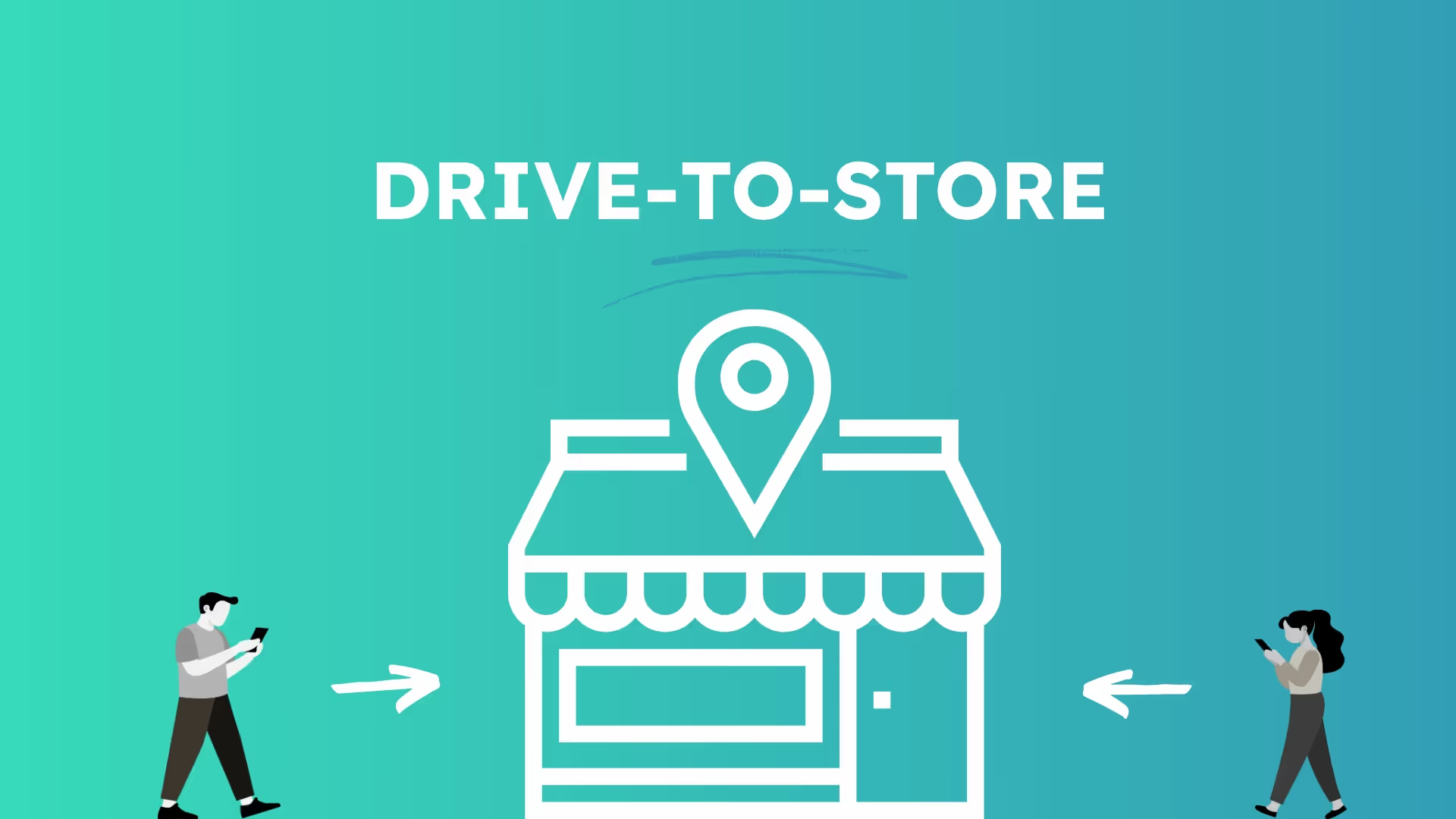
By leveraging GPS data and local digital advertising, Drive-to-Store has become an essential tool for driving foot traffic to physical stores.
---
📌 Defining Drive-to-Store
The term Drive-to-Store refers to all marketing activities aimed at encouraging consumers to visit a physical store, often through a localized marketing strategy and geo-targeted digital campaigns. The rise of smartphones and the use of location-based advertising now allow for ultra-personalization of messages.
🎯 Goal: increase in-store visits while optimizing advertising spend.
---
📉 Why invest in Drive-to-Store in the digital age?
While e-commerce continues to grow, consumers still value human interaction and the in-store experience:
> 🧾 75% prefer to complete their purchases in-store
>
> 🚪 49% go directly to the store without visiting the website first
>
> 🔍 54% check websites only to verify product availability
>
> (Source: Samsung Smart Retail Barometer, 2021)
👉 The physical store isn't disappearing: it's evolving. And omnichannel strategies are more relevant than ever.
---
🔁 The challenge: connecting online & offline channels
The drive-to-store marketing approach is part of an omnichannel strategy: digital advertising, physical traffic measurement, and location-based activation. This model bridges the gap between online campaigns and offline consumer behavior.
---
🧠 How does a drive-to-store campaign work?
1. Geo-targeted delivery
Users are targeted within the catchment area of a retail location using appropriate formats (banners, audio, short videos, etc.).
2. Impact measurement
We compare the behavior of an exposed group to that of a non-exposed group (control group). This is known as:
- Uplift : the rate of incremental visits attributable to the campaign
- Cost per incremental visit : a key KPI for Drive-to-Store
📊 These analyses are made possible by partners like Adsquare, who specialize in processing mobile GPS data in compliance with GDPR.
---
🚀 Which advertising channels should you use for your Drive-to-Store campaigns?
Display (banners)
Ideal for local campaigns with controlled costs. Lightweight format, geo-targeting, and high reach.
DOOH (Digital Out Of Home)
Digital out-of-home advertising allows you to broadcast dynamic messages near your points of sale. Industry leaders like JCDecaux measure the impact of screens on foot traffic.
Digital audio
Perfect for reaching users during screen-free moments. Audio, combined with location-based advertising, becomes a powerful and non-intrusive tool.
Waze Ads
With 16 million monthly users in France, Waze is a major asset for capturing drivers near a point of sale. Examples of formats: Pins, Takeovers, Search.
YouTube with geolocation
YouTube allows you tolink ad views to physical visits, notably through post-campaign surveys (“Have you visited this location?”). Very useful in a attribution logic.
---
🔧 Why measuring uplift is essential
Unlike simple visit counting,marketing uplift makes it possible to identify the actual traffic generated by the campaign. By cross-referencing GPS data with ad exposure, you get a precise view of performance.
---
🛠️ Common use cases
- 🚗 Automotive maintenance networks (e.g., campaigns for France Pare-Brise on Waze)
- 🛒 Retail chains (DOOH + local display)
- 🧥 Fashion & beauty retail (Digital audio + localized YouTube)
---
🙋♀️ FAQ – Everything you need to know about Drive-to-Store
🔹 What is Drive-to-Store?
Drive-to-Store refers to all marketing actions aimed at attracting consumers to a physical point of sale using digital channels.
🔹 What is the difference between Drive-to-Store and Click & Collect?
Drive-to-Store aims to generate a store visit, without necessarily finalizing the purchase online. Click & Collect is based on an online order picked up in-store.
🔹 Which channels should be used for a Drive-to-Store campaign?
Display, DOOH, digital audio, YouTube, Waze… all these channels allow you to activate measurable local campaigns.
🔹 How do you measure the ROI of a Drive-to-Store campaign?
Using anonymized GPS tracking tools and comparative analysis methods (uplift), you can measure the cost per incremental visit generated by the campaign.
---
🚀 In summary
The Drive-to-Store approach is much more than just a trend: it is a strategic lever for bridging the gap between digital and the physical world. Thanks to targeted local advertising, clear performance indicators , and geolocated advertising tools, brands can attract more customers… in-store.
🧠 Looking to launch a drive-to-store campaign? The Klox team is here to help you activate high-performance, measurable strategies.

Stay up to date and subscribe to our newsletter


.jpg)